
Federal Way Directory Collections
The best documented city directory run for this area is regional, not a shelf created by the modern city. The Seattle Municipal Archives genealogy collection holds Seattle directories covering 1890 through 1990 in its Research Room. Seattle Public Library and the University of Washington are also named repositories. Federal Way households may appear only when a regional volume reaches the south King County community or when a person also lived or worked in Seattle. Check coverage volume by volume.
| Collection | Years | Where Held | Access |
|---|---|---|---|
| Seattle city directories, including R.L. Polk runs | 1890-1990 | Seattle Municipal Archives, Seattle Public Library, UW | Research-room or repository access; verify Federal Way-area coverage |
| Polk reverse directories | 1939 onward documented | Seattle City Clerk, Seattle Public Library, other regional repositories | Search address to occupant where the volume covers the street |
| Federal Way News archive | Visible 1979 issues | Historical Society of Federal Way | Free digitized PDFs; complete run not verified |
| County and territorial census volumes | 1880-1892 | King County Archives | Archivist consultation; not every item is digitized |
| Federal census | 1790-1950 released | NARA and library genealogy databases | Search older precinct, township, and community labels |
| Washington Digital Archives | Varies by collection | Washington State Archives | Search collection title and King County filter online |
No official source reviewed proves a complete Federal Way city directory series. That gap matters. Federal Way did not incorporate until 1990, and older homes may be indexed under Redondo, Lakota, Dash Point, Five Mile Lake, a county precinct, or the wider school-district area. A missing name can reflect the book's boundary, not a person's absence. Ask staff to confirm the printed coverage before treating a blank year as evidence of a move.
Federal Way Directory Place Names
Federal Way first became a shared place name after five school districts consolidated in 1929. The municipal city followed in 1990. That sixty-one-year span creates a core directory problem: the community name existed before the city boundary and its records system. Earlier entries may sit under an unincorporated King County heading or a local place such as Redondo, Military Road, Lakota, Dash Point, Five Mile Lake, or Steel Lake.
Build a list of place variants before searching. Use a modern parcel map for the current legal description, but use older newspaper and directory language for the historic name. The Historical Society timeline follows the greater school-district area and notes that sources can differ. Keep the source label attached to each finding instead of forcing every old reference into today's city limits.
Federal Shopping Way, the former SeaTac Mall, Weyerhaeuser's Federal Way headquarters, schools, and old road names can help date a clipping or photo. They provide context, not proof that a person lived at the site.
Note: A pre-1990 Federal Way reference may describe a community or school-district area rather than an incorporated-city address.
Federal Way Historical Directory Files
The Historical Society of Federal Way collections add a local layer that regional city directories cannot supply. Formed in 1988, the Society reports thousands of images from roughly the past century, clippings, ephemera, photocopied photos, and a file-cabinet inventory compiled by Dorothy Burt. Its online inventory helps frame a request, but the photographs were not publicly viewable during research.
The Heritage Center is at 2645 S. 312th Street. Research is available by scheduled appointment, by email at contactus@federalwayhistory.org, or by phone at 253-945-7842. Mail goes to 1600 B SW Dash Point Road #125, Federal Way, WA 98023. Give the Society a surname, street, neighborhood, organization, and rough date. That is more useful than asking for every person with a common name.
The Society's files can connect a directory entry to a school, civic group, store, or former place name. Yet a caption or clipping remains a lead. Compare it with the printed book, census, deed, or court file that fits the question.
Preview the Historical Society collection page before arranging a visit.
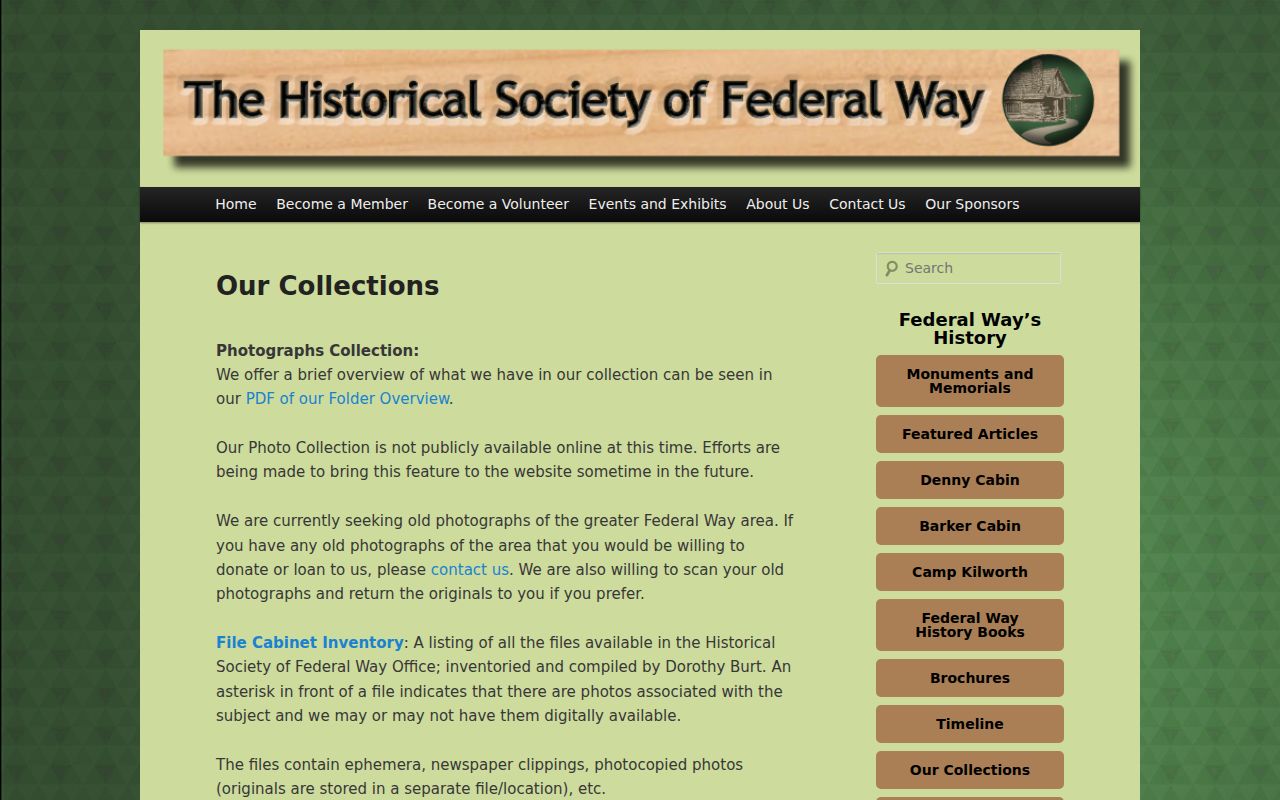
The captured collection overview shows why an appointment request should name a subject and era instead of assuming all holdings are digitized.
Federal Way News Directory Trail
The Federal Way News archive offers digitized PDF issues with a visible 1979 run. Search or scan for obituaries, marriage notices, school events, civic groups, store ads, and addresses. A newspaper may preserve the name a neighborhood used before later maps settled on a standard label. It can also place a person at a public event between two directory years.
Record the issue date and page with each finding. Newspaper mentions can help distinguish people who share a surname, but they do not replace a certified vital record or prove residence on their own. Follow a death notice into probate or cemetery records; follow a property advertisement into the assessor or deed index.
This people-record archive is especially useful for the late pre-incorporation period. It belongs beside, not inside, the regional directory run. The two sources were made for different purposes and may describe the same place in different ways.
Read Federal Way Directory Entries
A regional city directory entry is a snapshot created for the year printed on its cover. Official archive guidance says entries may include a resident or business name, street address, occupation, marital clues, and an ownership clue. One documented historical example lists a person as a laborer at an address. No scanned Federal Way page with a full key was found, so interpret marks from the exact volume in hand.
| Resident or business name | The indexed name; test surname variants and initials. |
|---|---|
| Street address | The location printed for that directory year, subject to the volume's geographic reach. |
| Occupation or role | A trade, role, or business context when the publisher included one. |
| Spouse or marital clue | A parenthetical name or widow mark whose meaning must come from the book's key. |
| Ownership or rental clue | A publisher's mark that may suggest status, but does not replace the recorded deed. |
| Page and source | The citation needed to return to the same entry and compare another year. |
- Criss-cross directory
- A reverse listing arranged by street and house number, so an address can lead to a named occupant.
- Householder index
- A list centered on the person named as head of a household, which may omit others at the address.
- Abbreviation key
- The publisher's explanation of shortened terms and symbols. Save it with the entry before interpreting any mark.
Terms such as “wid,” “r,” “h,” or “rooms” can vary by publisher and year. Do not modernize them by guesswork. Alphabetical sections move from surname to address; reverse sections move from street to the listed occupant. Neither structure identifies every household member or proves current occupancy.
Federal Way Reverse Directory Era
Seattle property-history guidance documents reverse lookup beginning in the 1938 era, with Polk reverse directories from 1939 onward. That is a major shift for Federal Way house research. A later volume may let an address lead to an occupant or property use, while an earlier volume usually requires a surname first.
Coverage is the limit. A Seattle volume does not automatically include every street now called Federal Way. Ask the holding library whether the exact street falls within that year's book. Test older spellings, a nearby community label, and both sides of a move date. The modern Federal Way street directory process is better for establishing today's address and parcel before opening a historic reverse book.
Reverse directories are strong at showing change between printed years. They are weak at explaining why a listing changed. A person may have moved, died, chosen not to list, been missed, or fallen beyond the book's boundary.
Note: Reverse lookup is practical only when the holding volume covers the exact Federal Way street and year being researched.
Federal Way Directory Archives Access
Use several access channels when no online city directory image appears. Start with Federal Way Library or Federal Way 320th Library. Their pages do not promise a named directory shelf, so ask staff for catalog searches, interlibrary loan, genealogy databases, newspaper access, and a referral to Seattle Public Library or UW.
The Washington State Archives maintains branch guides, while the Washington Digital Archives collection list offers online birth, census, marriage, publication, and agency material by collection. King County Archives holds census books, court indexes, maps, aerial images, and county records. Archivists can consult holdings remotely and provide copies, though original archival records do not circulate.
The Digital Archives collection page shows the statewide route available from home.
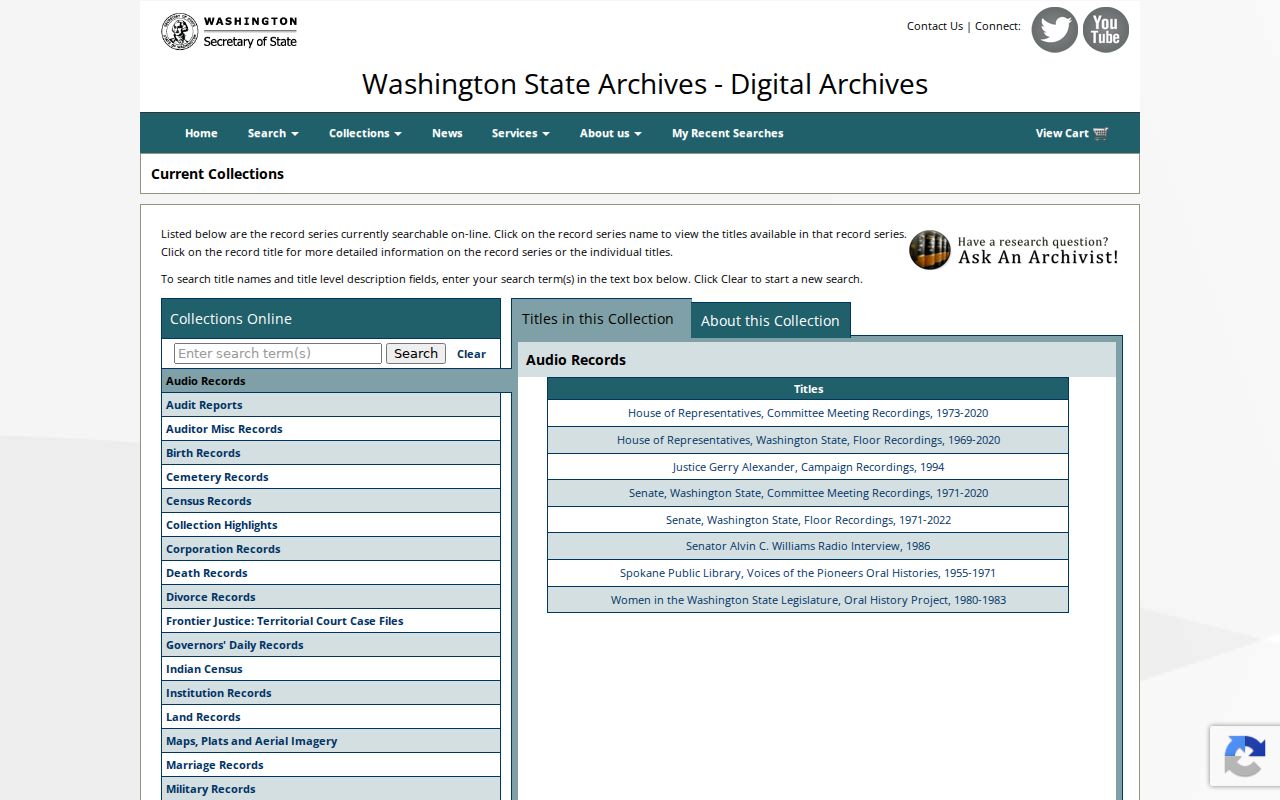
Use the exact collection title and a King County filter. A broad name search may mix people from many parts of Washington.
Seattle Municipal Archives adds an in-person Research Room, tax lists, a cemetery removal register, and genealogy referrals. The archival fallback is therefore online collection search, local library help, remote archivist consultation, and a research-room visit when the item cannot be copied from the web.
Federal Way Directory Library Story
Federal Way 320th Library opened in 1970, suffered an arson fire in 1975, moved salvaged materials to Federal Way High School, and reopened in 1976. Federal Way Library opened in 1991 and expanded in 2010. The sequence is a vivid part of local preservation history, but it does not prove that a complete city directory run survived at either branch.
That distinction helps set a sound research request. Ask a librarian what is cataloged now, whether a particular Polk volume can arrive through interlibrary loan, and which databases are available with a library card. Do not infer a missing year from the building fire or assume that salvaged materials included directories. The documented regional shelf remains at Seattle Municipal Archives, with other holdings at Seattle Public Library and UW.
The Seattle genealogy resource page shows the documented directory shelf and related research paths.
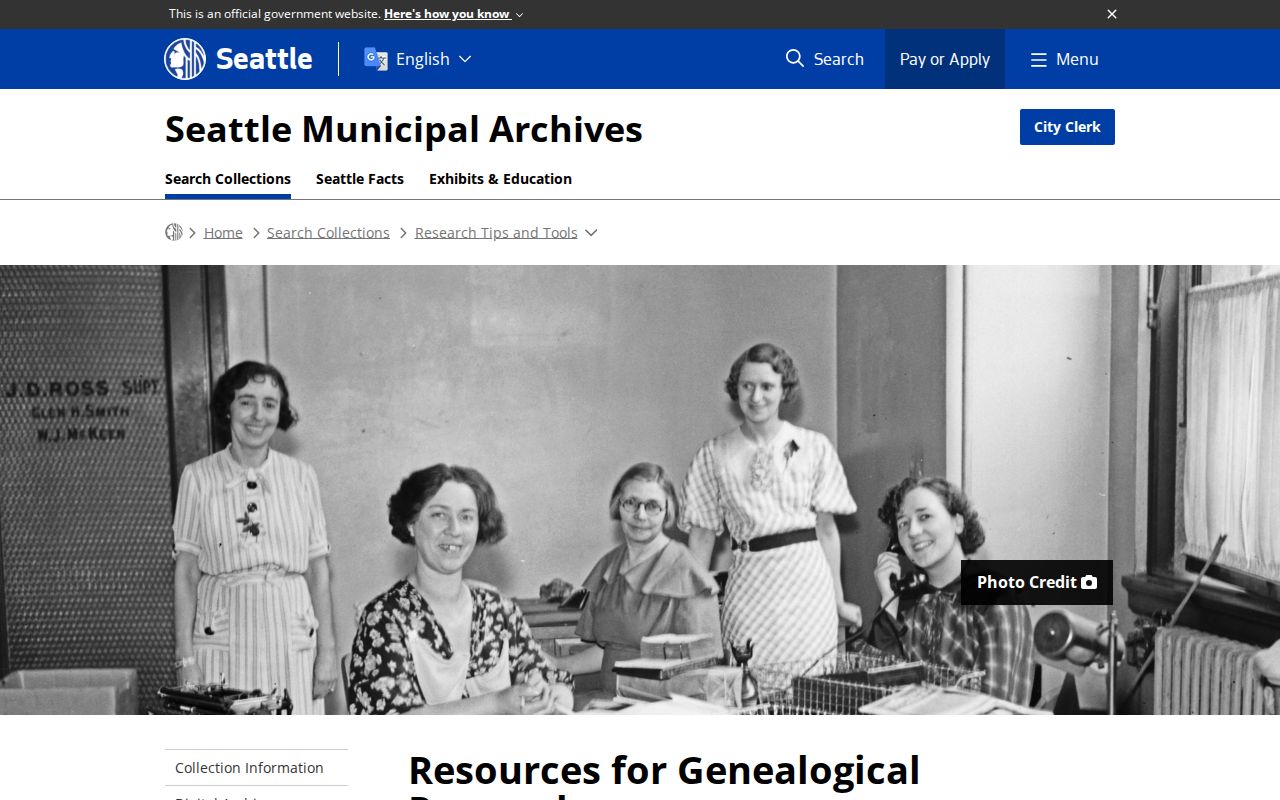
The archive page provides the source lead for a Federal Way researcher who has exhausted the local catalog.
Trace Federal Way Directory Families
A city directory works best as one dated point in a longer family trail. First establish today's parcel and legal description. Then work through printed years, the released census, newspaper notices, and deeds without assuming an owner was also an occupant.
- Save the modern situs address, King County PIN, subdivision, lot or block, and jurisdiction from Parcel Viewer.
- Test the exact address and older spellings in the nearest post-1938 reverse directory. Check community and county headings.
- Search alphabetical pages for surname variants. Record the occupation, spouse notation, address, marks, page, and year.
- Repeat around the 1930, 1940, and 1950 census years. Use age, birthplace, family ties, and work details to separate same-name people.
- Bridge a move or death through Federal Way News, obituaries, marriage notices, probate, or cemetery records.
- Use deeds and permits to date ownership and construction. Keep them separate from claims about occupancy.
The 1950 census is the latest released decennial census under the seventy-two-year rule. King County Archives also holds 1880 through 1892 county and territorial census volumes. Before incorporation, Federal Way may be recorded by township, precinct, or community. Search those labels alongside the surname.
A directory disappearance has several possible causes. Look for the same address in the reverse section, the same person in a nearby city, an obituary, a deed transfer, or a new census household. The Federal Way resident lookup can help verify a modern continuation without stretching an old book beyond what it proves.